Could you be the Low Fire Gut Type?
After more than 20 years in clinical practice, sitting across from thousands of patients and listening to their stories, one thing has become very clear…
Most people with gut symptoms are not lacking effort — they’re lacking the right direction.
They’ve tried the diets.
They’ve removed foods.
They’ve been given labels like IBS, without ever being told why their body is reacting the way it is.
And this is where the frustration begins. Because when you don’t understand what’s driving your symptoms, you end up stuck in a cycle of guessing, restricting, and hoping something will work, this is just managing your symptoms from one flare to another.
Over time, I started to notice patterns.
The same clusters of symptoms…
The same triggers…
The same underlying dysfunctions showing up again and again.
This is what led me to develop my 5 Gut Types — a simple but powerful way to understand what’s really happening inside your gut.
Because when you understand your gut type, everything starts to make sense and you can give your gut what it needs.
Your symptoms are no longer random.
Your triggers are no longer confusing.
And most importantly — you finally have a clear direction on what needs to be addressed, this really is the most important thing.
In this blog series, I’m introducing you to each of the 5 Gut Types, so you can start to recognise your own pattern.
And we’re starting with one of the most common — and most overlooked…(and this is not something standard care ever looks at or addresses). Most often prescription medication is actually doing the opposite, by suppressing acid production.
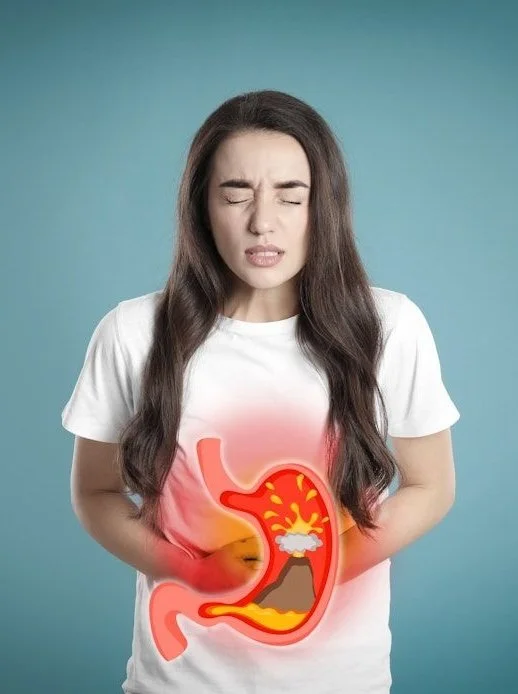
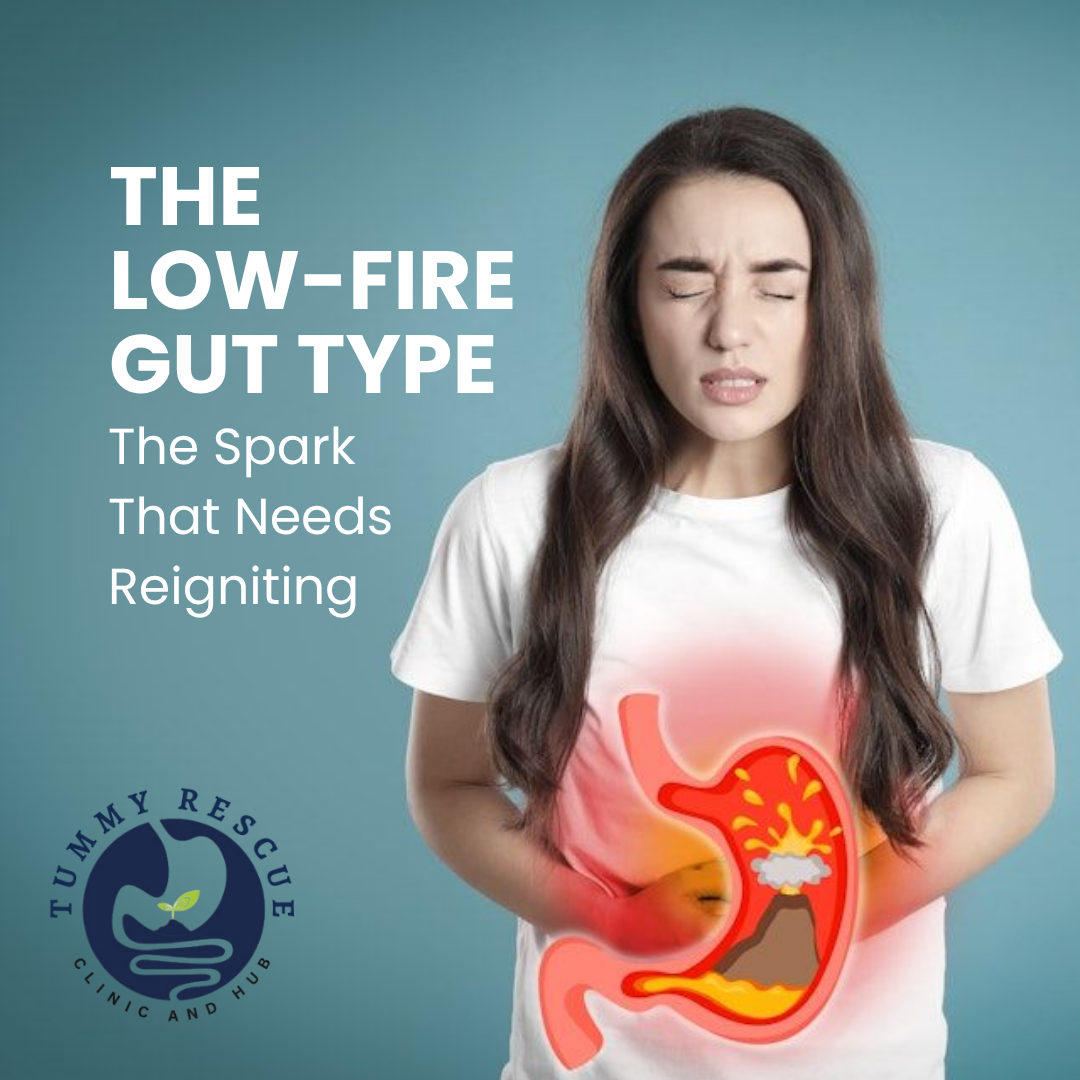
The Low Fire Gut Type
The Low Fire Gut is a functional gut type, this function is weak and needs boosting.
Your digestive “fire” — your ability to properly break down food is low, the spark needs to be reignited.
This isn’t something most people are ever told about.
In fact, many people with this gut type are often told they have too much stomach acid and are put on medication to suppress this further or are simply advised to avoid certain foods. But the real issue isn’t the food, it is your digestive capacity and how well (or poorly) you are digesting the foods you eat.
And when that process is sluggish or under-functioning, symptoms start to appear.
Common Signs of a Low Fire Gut
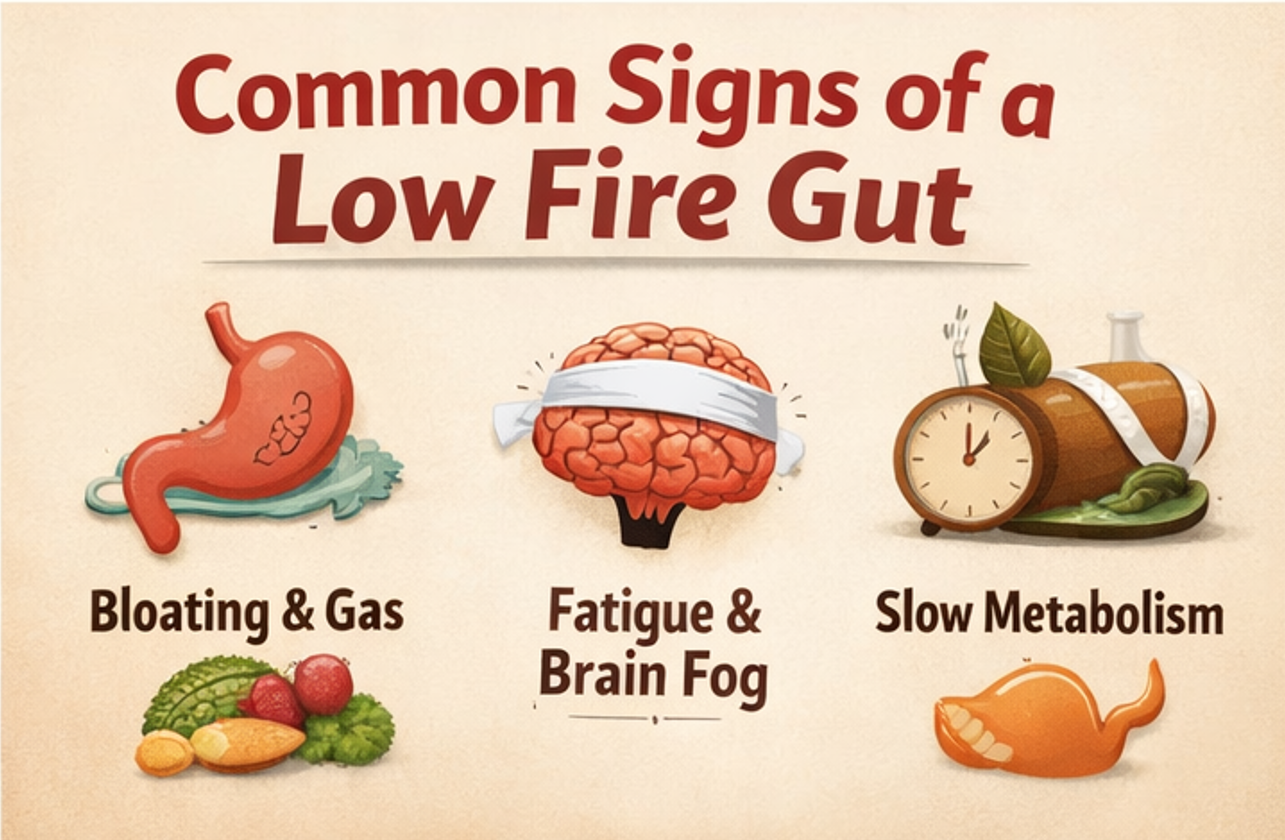
People with this gut type often describe their digestion as feeling:
Heavy after eating
Food “sitting in the stomach”
Easily bloated, especially after meals, even within the first 30 minutes
Worse with larger meals
You might also have these symptoms:
Burping or reflux shortly after eating
Feeling full quickly, but still unsatisfied
Fatigue after meals
Undigested food in stools (if you are not checking, you should be)
And one of the biggest clues…
You feel better when you eat less — not necessarily because your gut is “sensitive”, but because it’s struggling to break down any foods you are eating.
What’s Actually Happening in the Body
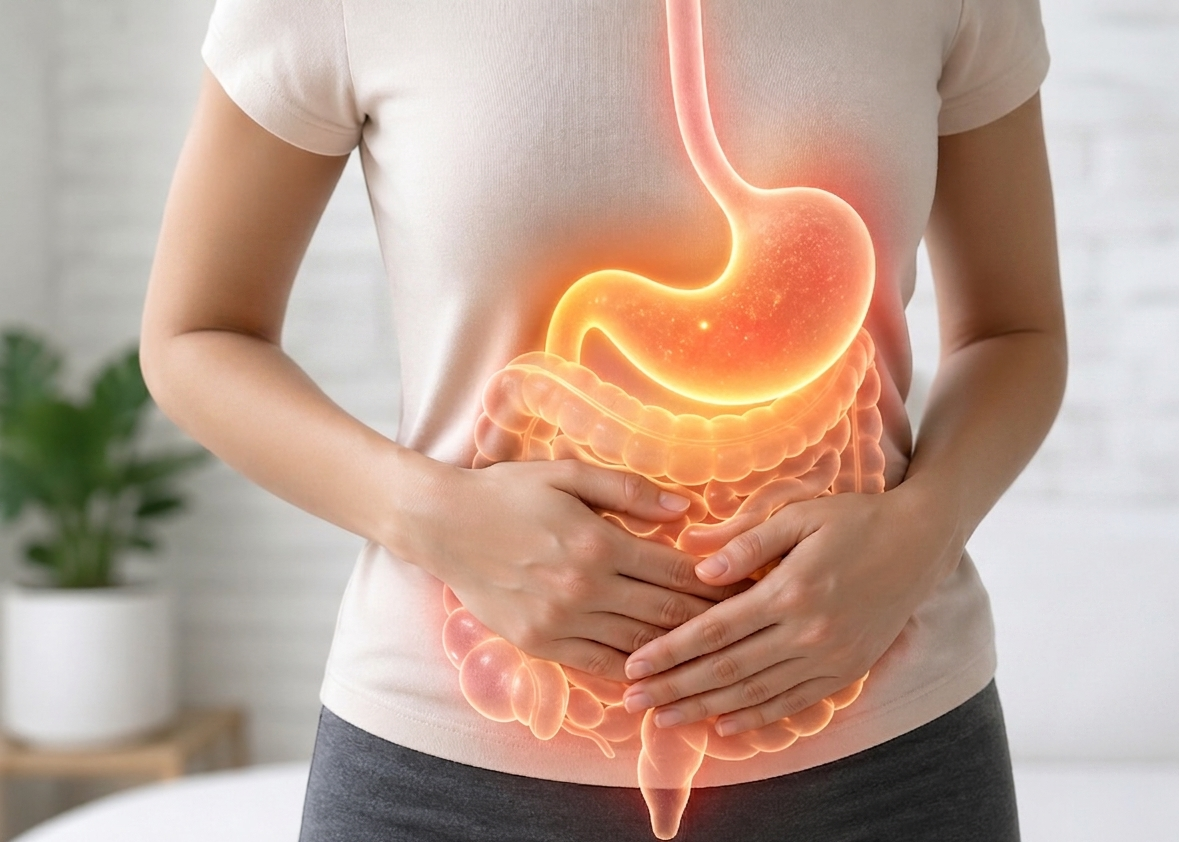
At the core of the Low Fire Gut is reduced digestive output.
This can involve:
Low stomach acid
Reduced enzyme production from the pancreas
Sluggish signalling between the brain and gut
This matters more than most people realise, because stomach acid is not just there to break down food.
It plays a critical role in:
Absorbing key nutrients like iron, B12, and zinc
Activating digestive enzymes further down the tract- every step impacts what happens in the next phase of digestion
Protecting against unwanted bacteria, stomach acid works as a defence mechanism
When this digestive “fire” is low, food isn’t properly broken down. And when food isn’t properly broken down, it doesn’t move through the gut as it should. It sits there longer and it ferments. This creates excess gas, pressure and then lead to those symptoms like excess fullness, reflux and tummy pain.
Why This Often Gets Missed

One of the biggest problems I see in clinic is that Low Fire Gut is rarely identified early.
Instead, people are often:
Put on restrictive diets
Told to avoid trigger foods
Given generic gut support supplements
Or prescribed antacids, which is the opposite of what we want to do
(This was me back in my early 20’s and one of the main reasons I am here today.)
And while these approaches might provide short-term relief…they don’t address the underlying issue. In fact, in many cases, they can make things worse down the track. This is because the more you restrict, the less stimulus your digestive system receives. And over time, your digestive capacity can decline even further.
The Ripple Effect on Gut Health
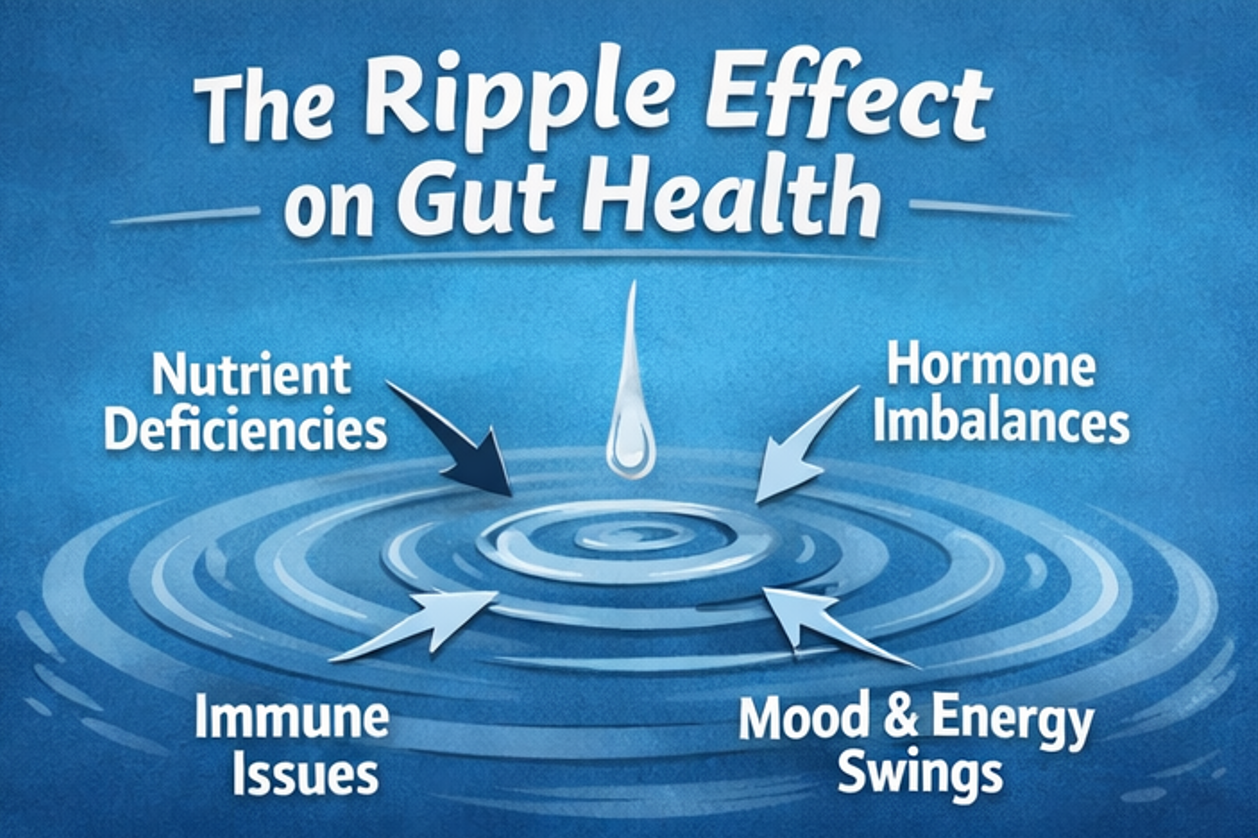
When digestion isn’t happening properly at the top of the system, it has a knock-on effect further down.
This is where we start to see connections between Low Fire Gut and other gut issues, such as:
Bloating that worsens throughout the day
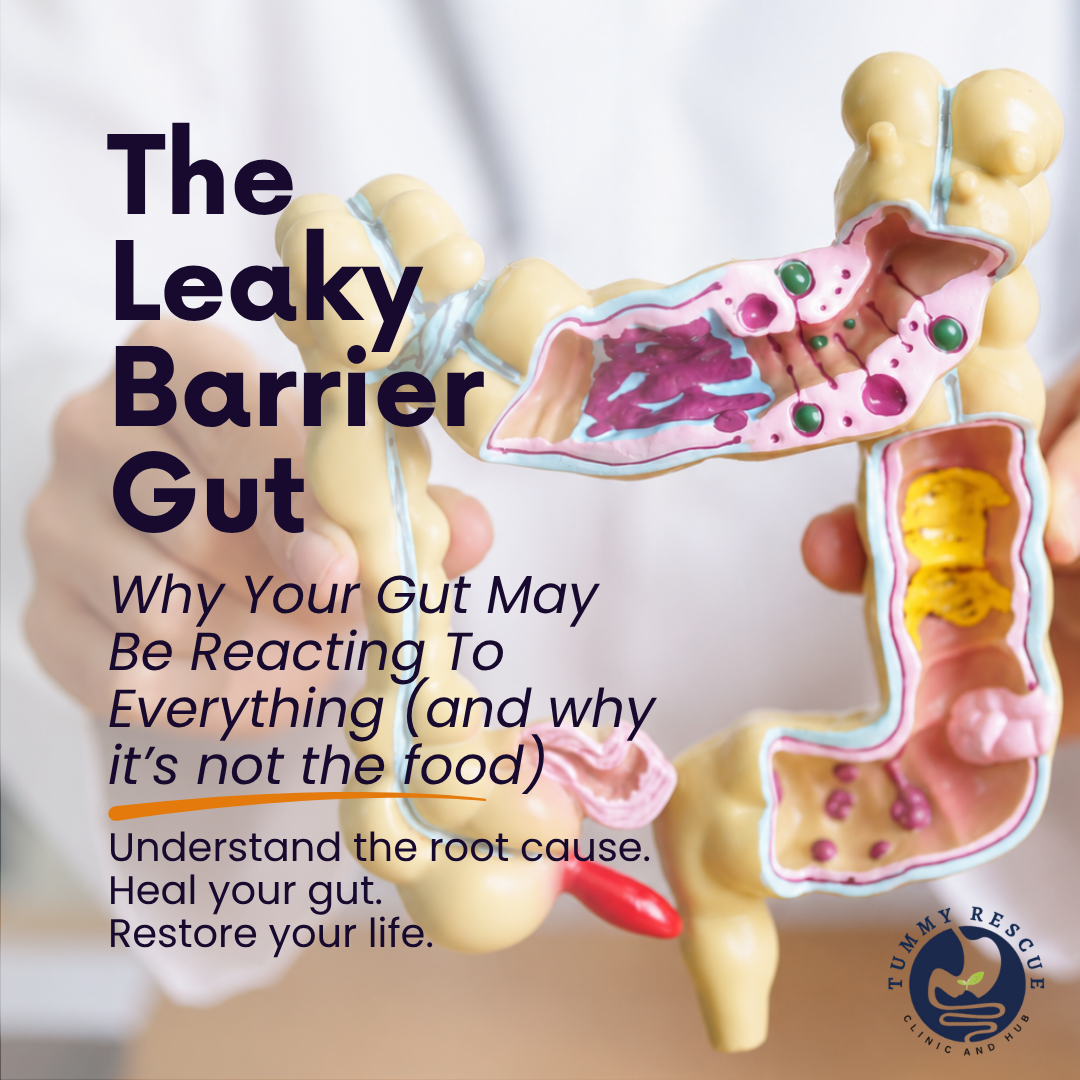
Increased food sensitivities (related to The Leaky Barrier Gut- we will discuss in the next blog)
Nutrient deficiencies despite a “healthy” diet
A tendency toward bacterial overgrowth (The Bugged -Out Gut)
This is why understanding your gut type is so important.
Because symptoms that seem unrelated are often part of connected underlying patterns.
This Is Where Most People Get Stuck
If you’ve been trying to “fix” your gut by removing foods, changing diets, or guessing your triggers…
But still feel like your digestion isn’t working properly…
There’s a good chance you’ve been focusing on the symptoms, not the root cause.
And this is exactly why I created the Gut Types framework.
Not to label you — but to give you clarity about what support your gut needs to improve the function, which leads to healing.
What We’ll Cover Next
This is just the beginning.
In the next blogs, I’ll walk you through the remaining Gut Types — each with their own unique patterns, symptoms, and underlying drivers.
And as you read through them, you may start to see yourself in more than one.
That’s normal.
Because gut issues are rarely one-dimensional.
But the key is identifying your dominant pattern — the one that’s been missed for years.
Want to Go Deeper?
If this is already resonating with you, the next step is understanding your gut type more clearly.
In May, I’ll be running a workshop where I’ll guide you through:
How to identify your gut type
What’s really driving your symptoms
And the exact steps to start addressing it properly
Because once you understand your gut…
Everything changes.
You can jump on the waitlist now- so you are the first to be notified when registrations open for the Gut Types Workshop.
More articles you might love:



Download my FREE E-book: 5 ways to reduce your bloating, pain & gas ☝️☝️☝️

The heartbeat
behind the work! 💚✨
🌿
I am Danielle Elliott a qualified Naturopath and the owner of Tummy Rescue.
I have been helping kids & adults improve their health for over 20 years, with the last 16 years concentrating on helping patients with any kind of gut disorder. I began focussing on everything gut related after my husband was diagnosed with Crohn’s Disease. And lucky I did……as my husband and both our kids have Coeliac Disease and my daughter has a dairy protein allergy.
So…. I am well and truly where I am meant to be!
I love being able to help people to soothe and calm their symptoms, investigate the causes and support and improve their gut function.
I also get to write educational pieces to train practitioners and am often interviewed for podcasts and summits, which is another really rewarding part of my work. I love educating people (this is something I do in every consult), because I do believe knowledge is power. It gives you the tools to make the changes you need to!
So, when you opt-in to my E-book, you are beginning on a journey of learning and discovery, of how you can reduce your symptoms of bloating, gas & pain and improve your gut health.
I would be honoured to help you along the way.
Danielle ✖️🧡✖️🧡