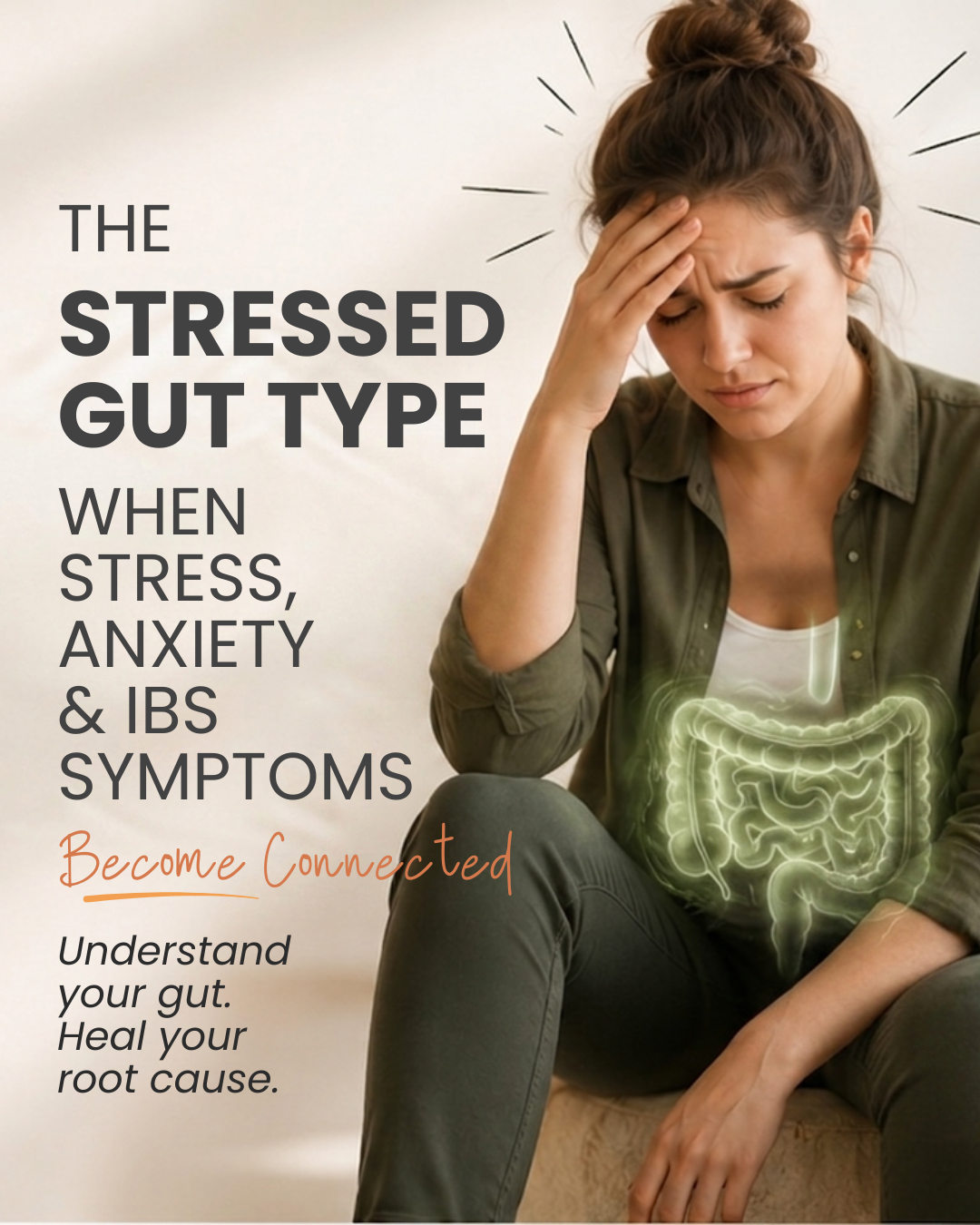
The Stressed Gut Type: When Stress, Anxiety & IBS Symptoms Become Connected
After more than 20 years in clinical practice, sitting across from thousands of patients and listening to their stories, one thing has become very clear…
Most people with gut symptoms are not lacking effort — they’re lacking the right direction.
They’ve tried the diets.
They’ve removed foods.
They’ve been given labels like IBS, without ever being told why their body is reacting the way it is.
And this is where the frustration begins.
Because when you don’t understand what’s driving your symptoms, you end up stuck in a cycle of guessing, restricting, and hoping something will work.
Over time, I started to notice patterns.
The same clusters of symptoms…
The same triggers…
The same underlying dysfunctions showing up again and again.
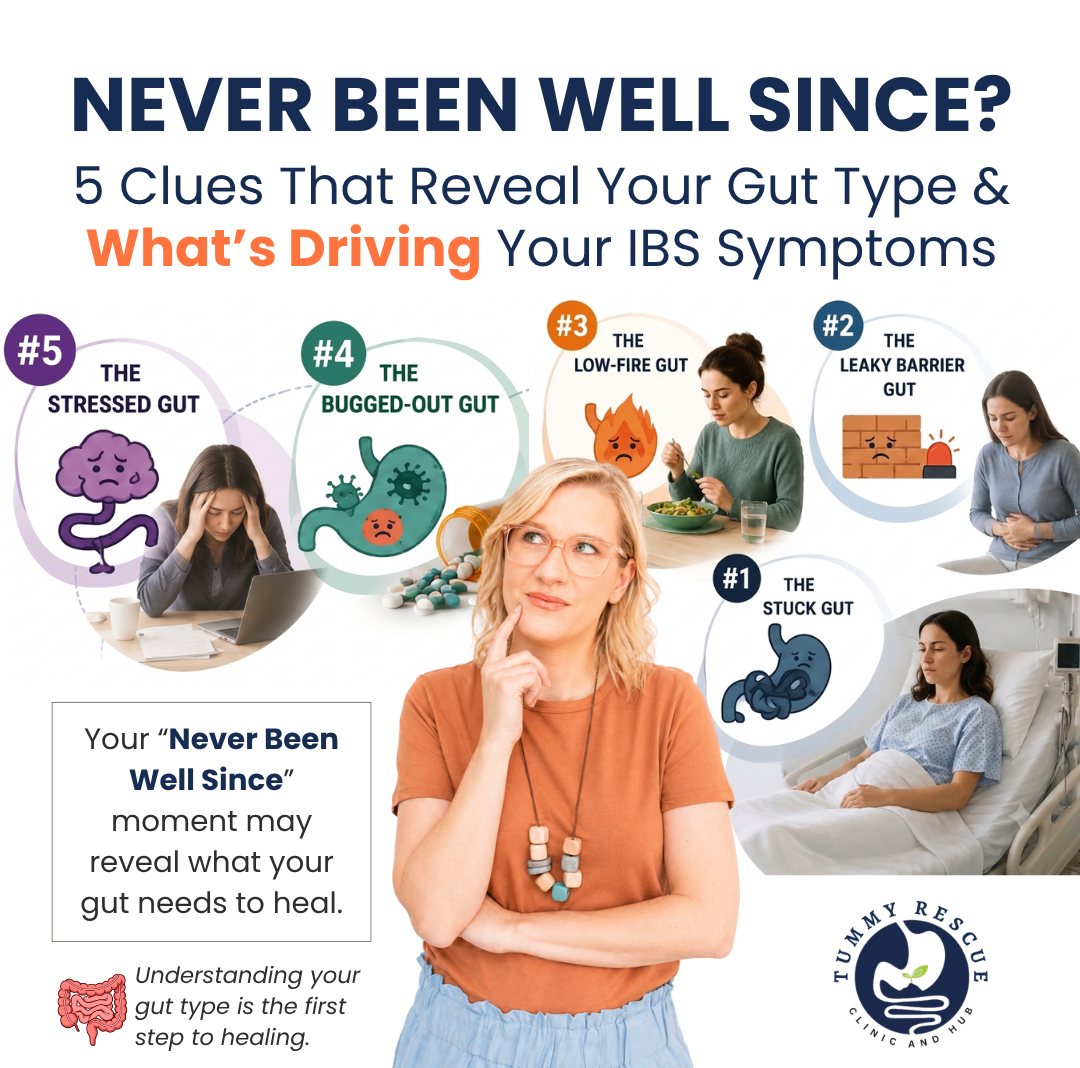
This is what led me to develop my 5 Gut Types — a simple but powerful way to understand what’s really happening inside your gut.
Because when you understand your gut type, everything starts to make sense.
Your symptoms are no longer random.
Your triggers are no longer confusing.
And most importantly — you finally have a clear direction on what needs to be addressed.
In this blog series, I’m introducing you to each of the 5 Gut Types, so you can start to recognise your own pattern.
This is the fourth gut type in the series — and for many people, it’s the one that finally explains why their symptoms flare during stress, overwhelm, rushing, anxiety, or emotional pressure.
(If you haven’t read the other 3, go back after this and see if they could be your gut type)
The Stressed Gut Type
The Stressed Gut is one of the most misunderstood gut patterns I see in clinic.
Because people often hear:
“It’s just stress.”And immediately feel dismissed.
But this gut type is not about symptoms being “all in your head.”
The symptoms are very real.
The bloating is real.
The pain is real.
The urgency is real.
The digestive disruption is real.
What is important to understand is this: Your gut and nervous system are deeply connected.
And when the nervous system becomes overwhelmed, dysregulated, or constantly switched into survival mode, digestion is one of the first systems affected.
The Gut-Brain Connection Is Powerful
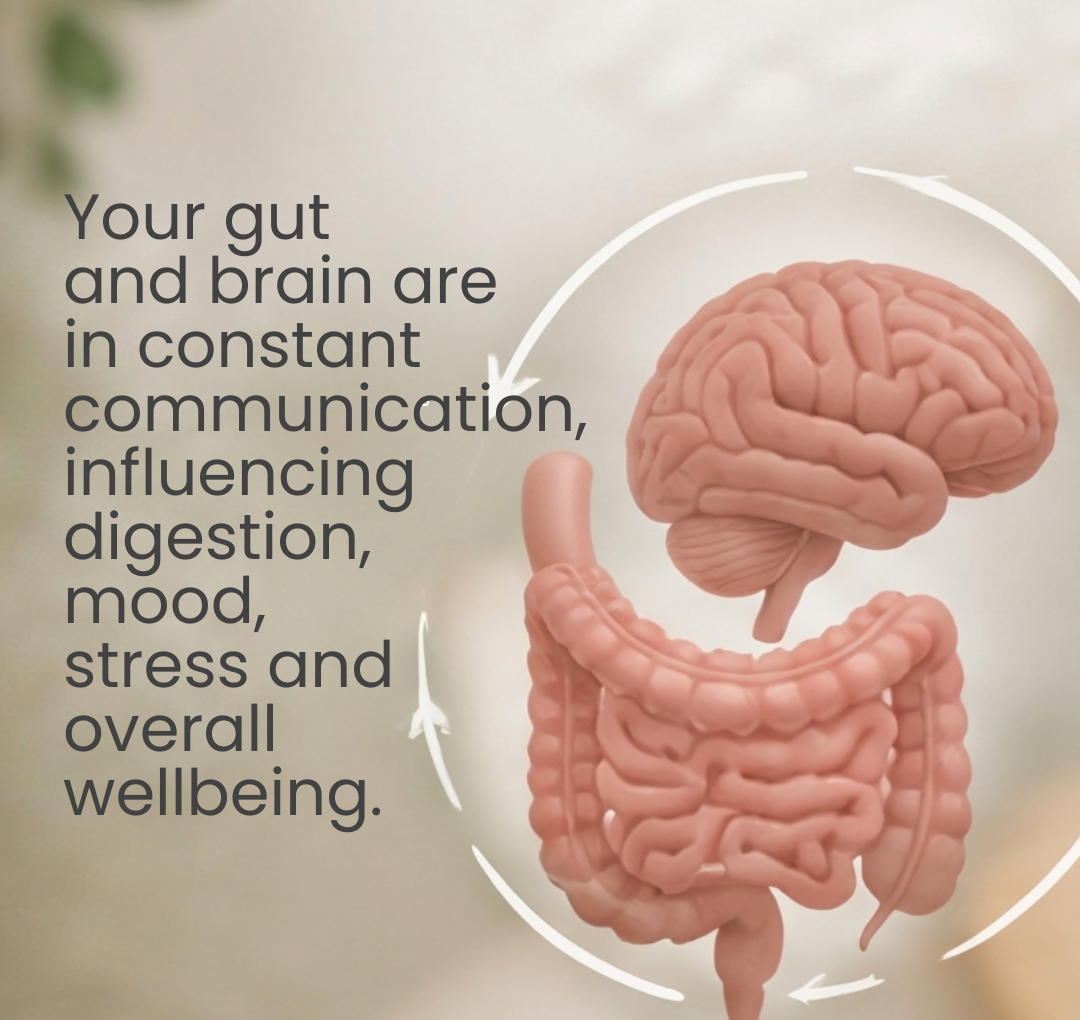
Your digestive system is constantly communicating with your brain through what’s known as the gut-brain axis.
This communication influences:
Digestion
Motility
Enzyme release
Pain sensitivity
Inflammation
Bowel habits
In a calm, regulated state, the body prioritises digestion and repair.
But under stress? The body shifts its focus toward survival. And in survival or fight or flight mode digestion is not a priority. So blood gets redirected from the gut to the arms, legs and brain, making digestion weaker.
Common Signs of a Stressed Gut
People with this gut type often notice their symptoms fluctuate depending on what’s happening in life.
They may say things like:
“My gut gets worse when I’m stressed.”
Or:
“I can eat something one day and tolerate it… then react to it the next.”
Common symptoms can include:
Bloating during stressful periods
Urgency or loose stools
Stomach tension or “knots”
Nausea or loss of appetite under stress
Increased gut sensitivity
IBS flare-ups during busy or emotional periods
Increased food reactions during stress
Some people also notice other symptoms:
Feeling “wired but tired”
Difficulty switching off
Poor sleep
A sense that their body is constantly on edge
Why Stress Impacts Digestion So Strongly
When the nervous system perceives stress, digestion becomes less of a priority.
This can affect:
Stomach acid production
Digestive enzyme release
Gut motility
Blood flow to the digestive tract
Muscle tension within the gut
Over time, this can contribute to symptoms becoming more reactive and unpredictable.
And importantly…
This doesn’t only apply to major trauma or extreme stress.
For many people, it’s the accumulation of:
Chronic busyness, never switching off
Emotional overload
Hypervigilance, living in “what if this happens”
Poor recovery
Lack of nervous system regulation
Years of “pushing through”
That gradually changes how the gut functions.
The Cycle That Keeps People Stuck
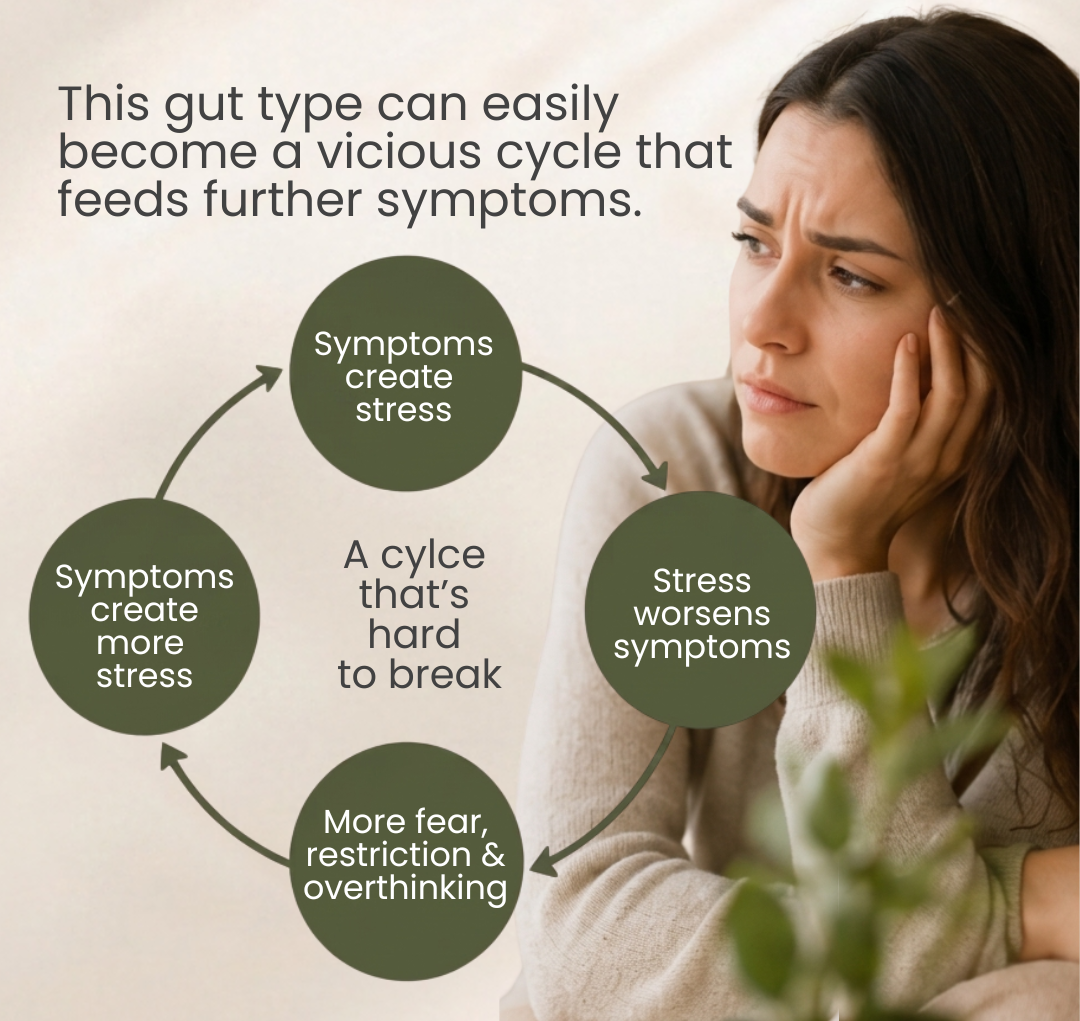
Over time, many people begin:
Over-monitoring symptoms – being hypervigilant (this can be subconscious too)
Feeling anxious around meals
Restricting foods unnecessarily, for fear of a flare
Losing trust in their body
And while food can absolutely play a role…
For this gut type, the nervous system is often a major missing piece.
The Stressed Gut Often Overlaps With Other Gut Types
One of the most important things to understand is that stress doesn’t just affect the nervous system.
It can also contribute to:
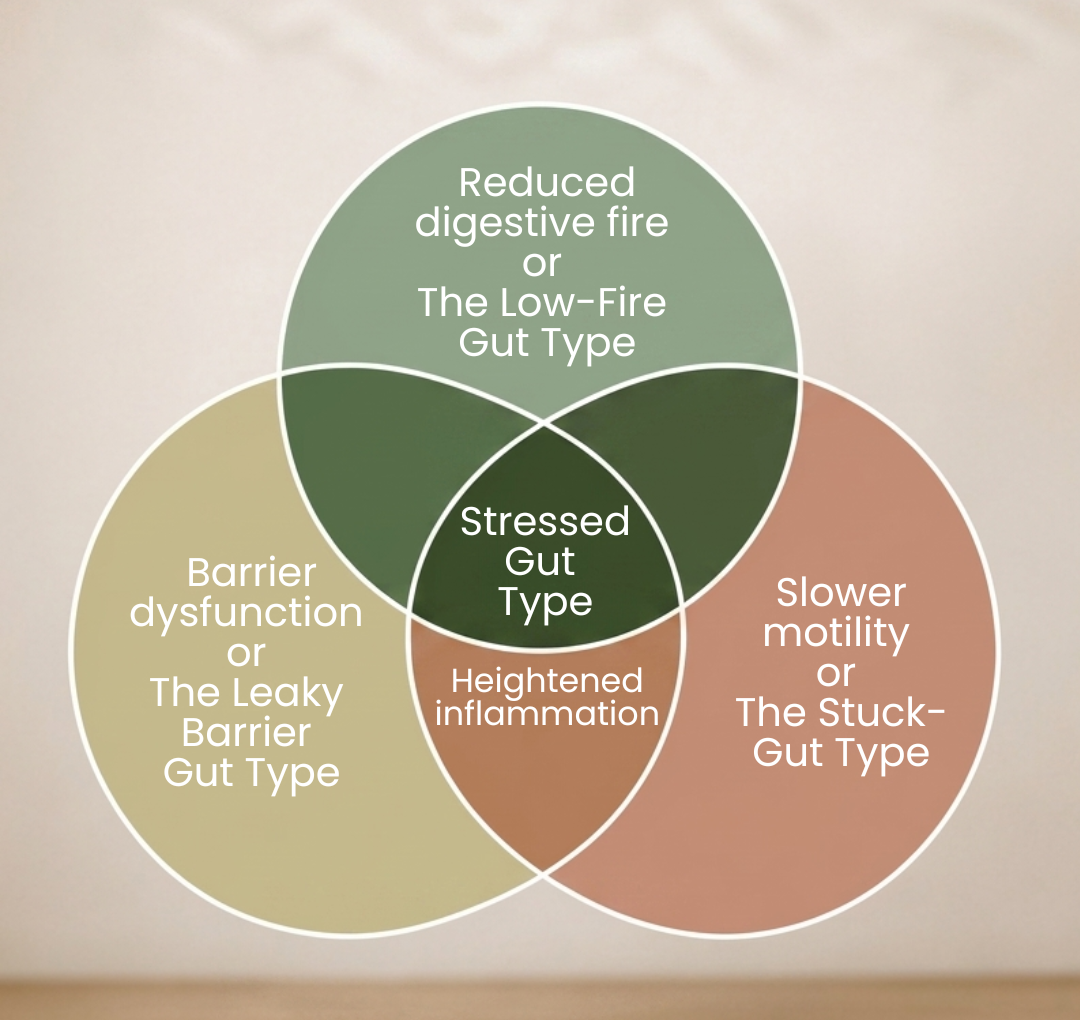
This is why stress can amplify nearly every gut symptom.
And why many people don’t fully improve until the gut-brain connection is addressed properly.
This Is Why Understanding Your Gut Type Matters
When you understand the Stressed Gut pattern, you stop viewing your symptoms as random or irrational.
You begin understanding:
Why flare-ups happen during stressful periods
Why food reactions may feel inconsistent
Why “doing everything right” still hasn’t fixed things
And why your body may be asking for support beyond just diet changes
Because healing the gut is rarely just about removing foods.
It’s about understanding the systems driving the symptoms underneath.
What We’ll Cover Next
In the final blog in this series, I’ll introduce the fifth Gut Type — another major missing piece behind chronic IBS symptoms that many people have never properly connected to their gut.
And by this stage, you’ll likely begin seeing how these gut types often overlap and interact together.
Want Help Understanding Your Gut Type?
If this blog resonated with you, this is exactly the kind of work we go deeper into inside the Tummy Rescue Hub and in consultations.
Because understanding your gut type helps you stop guessing and finally start making sense of your symptoms.
Inside the Hub and my teaching workshops, I help people understand:
The deeper drivers behind IBS symptoms
How the gut types overlap
Why symptoms become chronic
And how to support the gut in a way that works with the body, not against it
Because once you understand what your gut is trying to tell you…
Everything changes.
More articles you might love:



Download my FREE E-book: 5 ways to reduce your bloating, pain & gas ☝️☝️☝️

The heartbeat
behind the work! 💚✨
🌿
I am Danielle Elliott a qualified Naturopath and the owner of Tummy Rescue.
I have been helping kids & adults improve their health for over 20 years, with the last 16 years concentrating on helping patients with any kind of gut disorder. I began focussing on everything gut related after my husband was diagnosed with Crohn’s Disease. And lucky I did……as my husband and both our kids have Coeliac Disease and my daughter has a dairy protein allergy.
So…. I am well and truly where I am meant to be!
I love being able to help people to soothe and calm their symptoms, investigate the causes and support and improve their gut function.
I also get to write educational pieces to train practitioners and am often interviewed for podcasts and summits, which is another really rewarding part of my work. I love educating people (this is something I do in every consult), because I do believe knowledge is power. It gives you the tools to make the changes you need to!
So, when you opt-in to my E-book, you are beginning on a journey of learning and discovery, of how you can reduce your symptoms of bloating, gas & pain and improve your gut health.
I would be honoured to help you along the way.
Danielle ✖️🧡✖️🧡