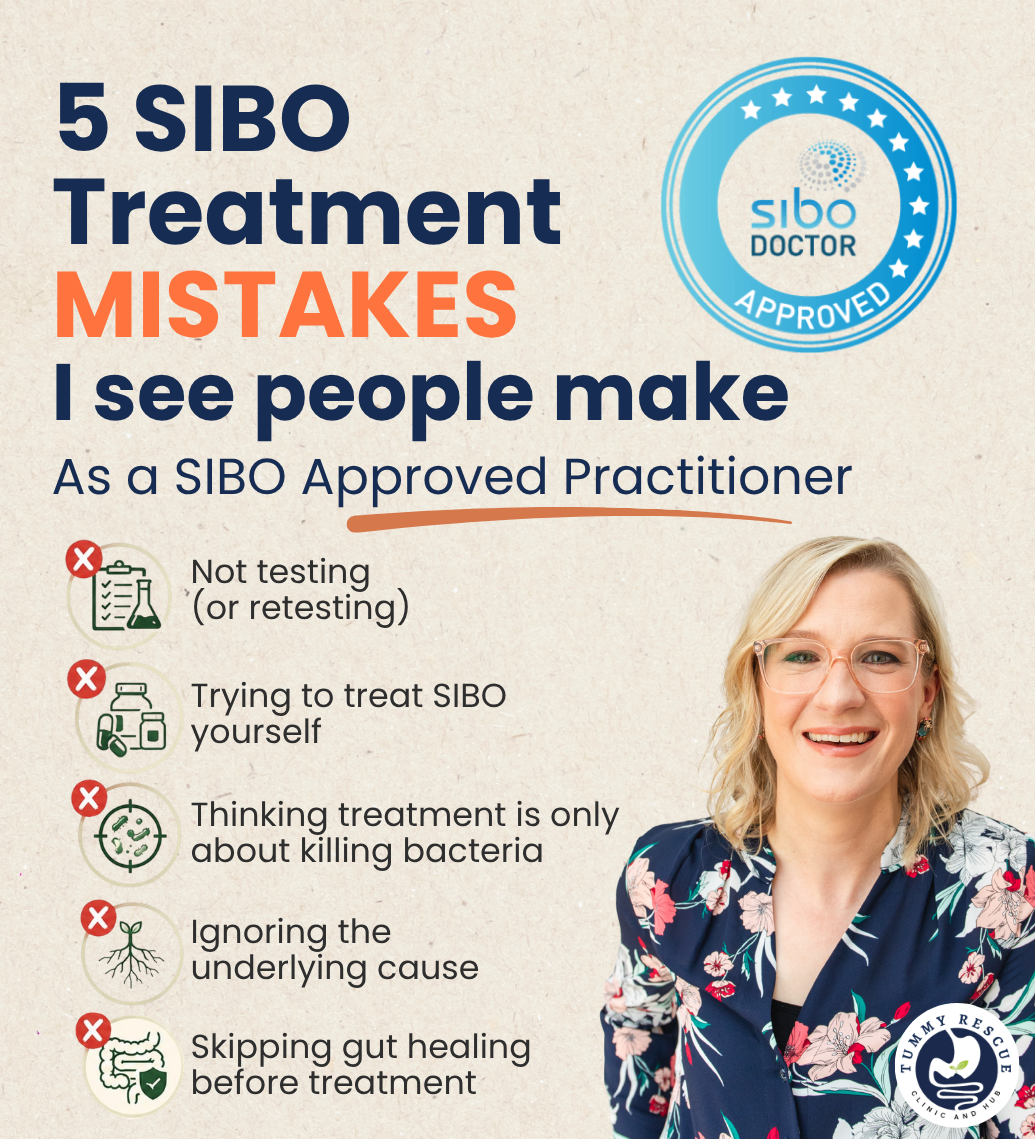
5 SIBO Treatment Mistakes I See People Make as a SIBO Doctor Approved Practitioner
If you've been diagnosed with SIBO (Small Intestinal Bacterial Overgrowth), you've probably already discovered that treating it isn't as straightforward as taking a course of antibiotics or herbal antimicrobials.
In fact, one of the biggest reasons I see people struggle with recurring symptoms isn't because SIBO is "untreatable." It's because they've unknowingly been following advice that only addresses one small piece of the puzzle.
As a SIBO Doctor Approved Practitioner and naturopath with over 20 years of clinical experience helping people with IBS, bloating and digestive disorders, I've worked with many people who have already spent months—or even years—trying to fix their SIBO before they arrive in my clinic.
The good news? Many of the mistakes are completely avoidable.
Here are the five most common SIBO treatment mistakes I see.
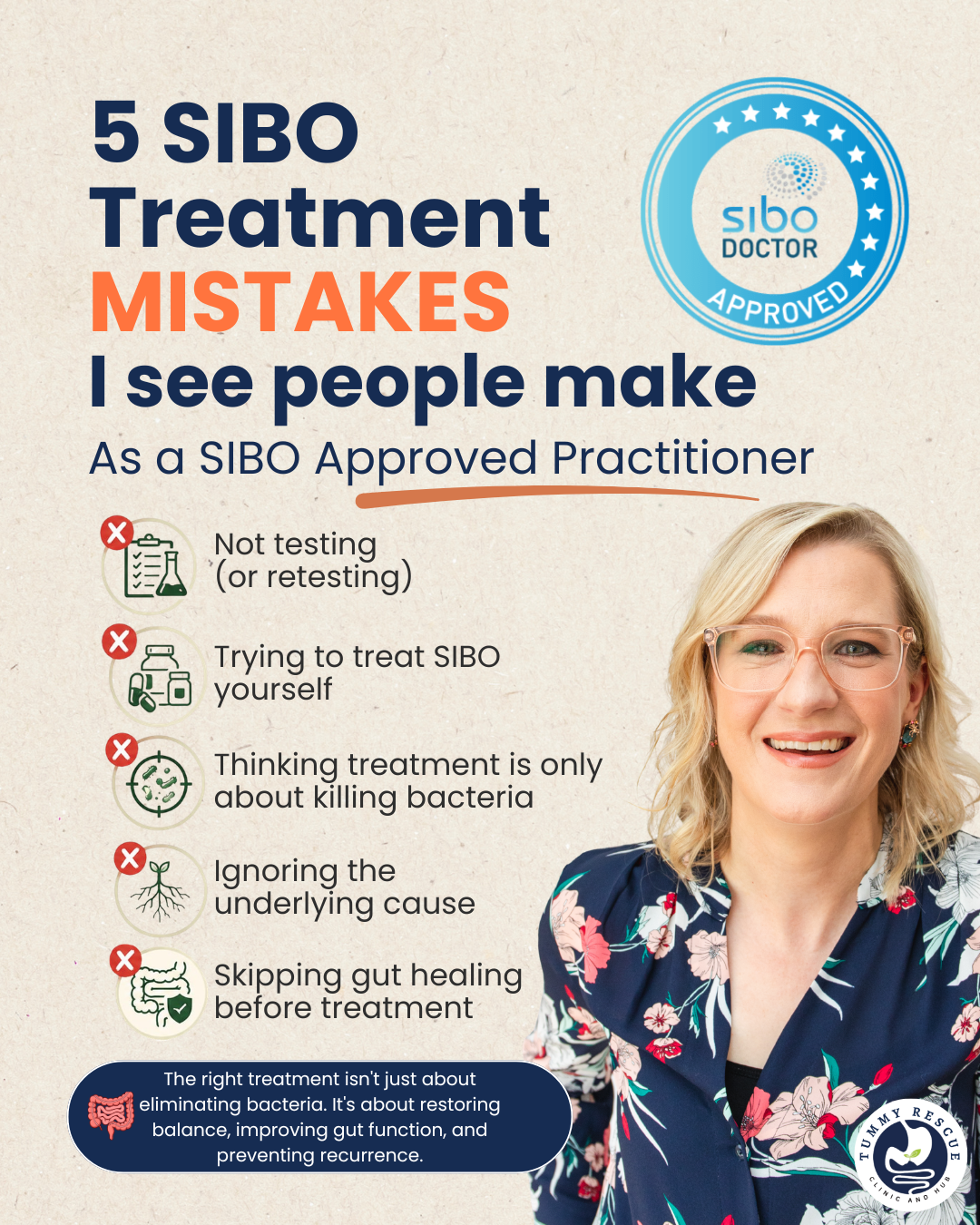
1. Not Testing... or Not Retesting
One of the biggest misconceptions is that you can accurately diagnose or monitor SIBO based on symptoms alone.
Yes, bloating, abdominal pain, excessive gas, constipation and diarrhoea are common signs of SIBO—but they're also symptoms of many other gut conditions. Food intolerances, parasites, inflammatory bowel disease, coeliac disease, pancreatic insufficiency and even poor stomach acid production can all produce very similar symptoms.
That's why testing matters.
A quality breath test doesn't just help determine whether SIBO is present. It can also tell us:
Whether methane, hydrogen are involved (or possibly hydrogen sulphide gases)
How severe the overgrowth appears to be- this can guide treatment length
Which treatment approach may be most appropriate
Whether treatment has actually worked, in the case of re-testing
Unfortunately, many people never retest and think if their symptoms are not 100% improved then they need to stay on antimicrobials or antibiotics longer.
The reality is symptoms don't always tell the whole story. Sometimes people continue to have symptoms even after successfully clearing the bacterial overgrowth because another underlying issue still needs attention.
Without testing, you're often guessing.
2. Trying to Treat SIBO Yourself
It's understandable.
Social media is full of SIBO protocols. Facebook groups recommend countless supplements. Influencers share their "miracle" combinations.
The problem is that SIBO isn't a one-size-fits-all.
What worked for one person may be completely inappropriate for another.
I frequently see people taking 3-6 herbal antimicrobials at once, restrictive diets continued for years, probiotics and supplements they've pieced together from the internet—often without understanding why they're taking them.
Sometimes they've spent hundreds or even thousands of dollars before seeking professional help.
Effective SIBO treatment requires understanding much more than simply identifying bacteria.
Questions we need to answer include:
Why did the SIBO develop in the first place?
Are there problems with gut motility?
Is stomach acid low?
Are digestive enzymes inadequate?
Is constipation contributing?
Is there another gut condition driving the symptoms?
Without answering those questions, treatment often becomes trial-and-error.
3. Thinking SIBO Treatment Is Just About "Killing the Bacteria"
This is probably the biggest mistake I see.
Many people assume the goal is simply to kill as much bacteria as possible.
So they throw everything at it. Multiple rounds of antibiotics and herbal antimicrobials, using inefficient doses or going way too high. While antimicrobial treatment certainly has a place, more isn't always better.
The bacteria causing SIBO are not "bad bacteria" in the traditional sense. They're bacteria that belong in the large intestine but have ended up living in the wrong location.
Aggressively trying to wipe everything out without considering the rest of the gut environment can sometimes create new problems.
I've seen people finish several rounds of treatment only to find they're left with increased food sensitivities, a weakened microbiome, digestive discomfort or ongoing symptoms because the underlying reason the bacteria moved into the small intestine was never addressed.
Successful SIBO treatment isn't simply about eradication, it's about restoring balance & function.
4. Ignoring the Underlying Cause
This is where many treatment plans fail the patient. SIBO is usually a consequence—not the root problem.
Something allowed bacteria to accumulate in the small intestine. If that reason isn't identified and corrected, recurrence becomes much more likely.
Some common contributing factors include:
Poor gut motility
Previous food poisoning or gastroenteritis
Chronic constipation
Low stomach acid
Digestive enzyme insufficiency
Structural issues or abdominal adhesions
Stress affecting the gut-brain connection
Certain medications
Coexisting digestive conditions, that have not been identified
Every person develops SIBO for slightly different reasons. Finding and addressing those drivers is one of the most important parts of creating lasting improvements. It's also the part that's often overlooked in DIY protocols.
5. Not Healing the Gut Before Starting Treatment
This one often surprises people. Many assume the first step should always be attacking the bacterial overgrowth. In reality, that's not always the best and first place I begin.
If someone has significant inflammation, increased intestinal permeability ("leaky gut"), poor digestion or a very reactive digestive system, jumping straight into aggressive antimicrobial treatment can sometimes make them feel considerably worse.
Think of it like renovating a house.
If the foundations are unstable, knocking down walls & rebuilding without first addressing the foundations, isn't usually the smartest strategy.
Supporting digestion, calming inflammation and strengthening the gut lining can help create a healthier environment before moving into more targeted treatment. After almost 20 years of supporting people with SIBO, I have found this leads to people tolerating their treatment and effective results. The sequence matters just as much as the supplements themselves.
The Bottom Line
If you've been battling SIBO for months or years, it's worth remembering that repeated treatment failures don't necessarily mean you're impossible to treat.
More often, it means an important piece of the puzzle has been missed.
Rather than focusing solely on eliminating bacteria, successful treatment usually involves understanding why the SIBO developed, confirming whether it's actually present through appropriate testing, supporting the gut as a whole and following a treatment plan that's tailored to your individual case.
That's the difference between chasing symptoms and addressing the underlying drivers.
Ready to Get to the Bottom of Your Gut Symptoms?
More articles you might love:




Download my FREE E-book: 5 ways to reduce your bloating, pain & gas ☝️☝️☝️

The heartbeat
behind the work! 💚✨
🌿
I am Danielle Elliott a qualified Naturopath and the owner of Tummy Rescue.
I have been helping kids & adults improve their health for over 20 years, with the last 16 years concentrating on helping patients with any kind of gut disorder. I began focussing on everything gut related after my husband was diagnosed with Crohn’s Disease. And lucky I did……as my husband and both our kids have Coeliac Disease and my daughter has a dairy protein allergy.
So…. I am well and truly where I am meant to be!
I love being able to help people to soothe and calm their symptoms, investigate the causes and support and improve their gut function.
I also get to write educational pieces to train practitioners and am often interviewed for podcasts and summits, which is another really rewarding part of my work. I love educating people (this is something I do in every consult), because I do believe knowledge is power. It gives you the tools to make the changes you need to!
So, when you opt-in to my E-book, you are beginning on a journey of learning and discovery, of how you can reduce your symptoms of bloating, gas & pain and improve your gut health.
I would be honoured to help you along the way.
Danielle ✖️🧡✖️🧡