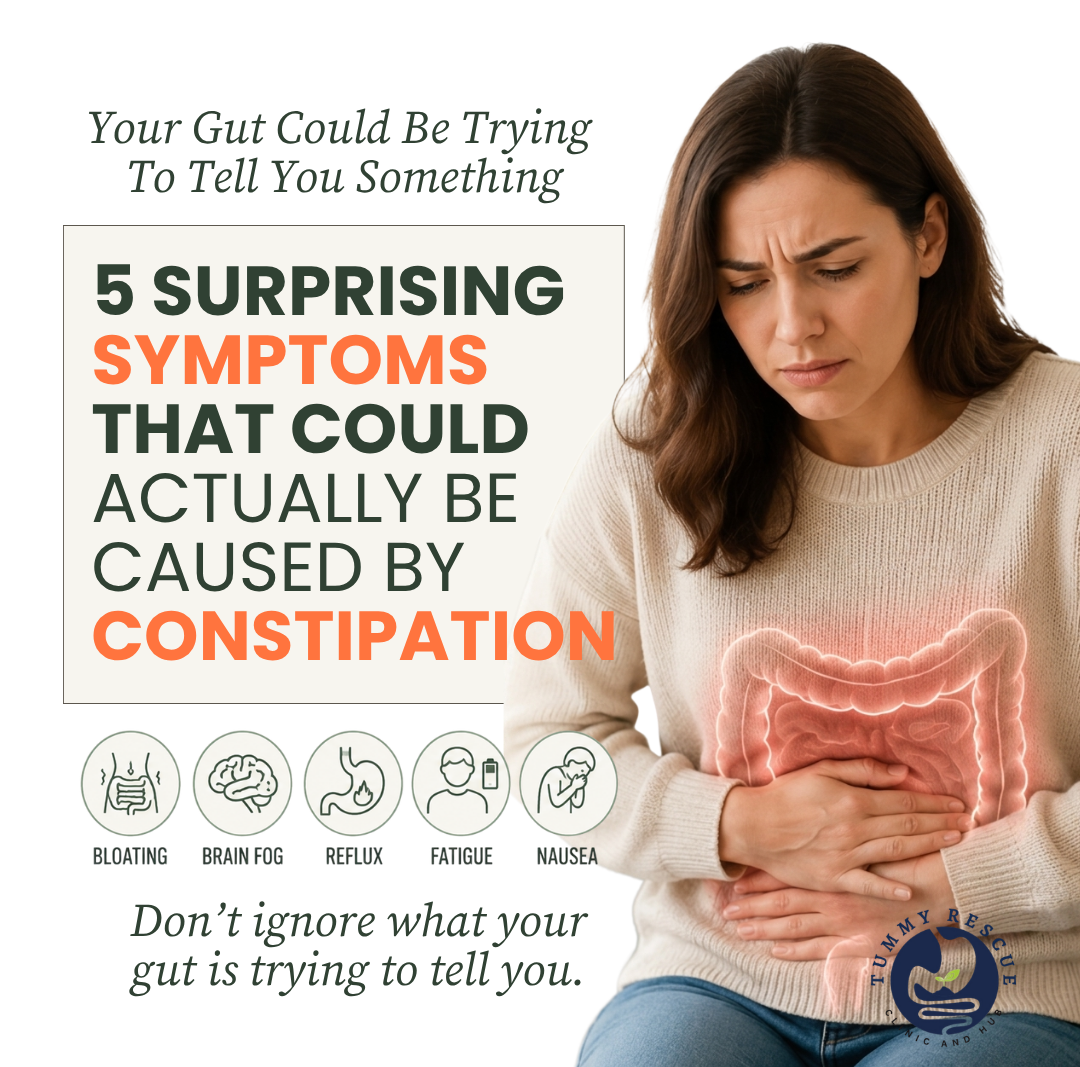
5 Surprising Symptoms That Could Actually Be Caused by Constipation
When most people think of constipation, they imagine someone who hasn't opened their bowels for several days.
But after more than 20 years as a naturopath specialising in gut health, I can tell you that constipation is far more complicated than that.
Many of my patients tell me,
"But I go every day."
Yet further questioning, physical examination or imaging (like an X-ray) reveals significant faecal loading.
Constipation isn't just about how often you go—it's about how effectively you're emptying.
When stool remains sitting in the colon, it doesn't simply cause discomfort. It can create pressure throughout the digestive tract, alter your gut microbiome, increase fermentation, affect nervous system signalling and contribute to symptoms you may never suspect are connected.
As someone who has spent over two decades helping people uncover the root causes of IBS, SIBO and chronic digestive symptoms—and who has lectured to practitioners across Australia on IBS and SIBO—I see these hidden patterns every week in clinic.
Let's count down the five surprising symptoms (I saved the most surprising for last), that may actually be telling you your bowels aren't emptying as well as you think.
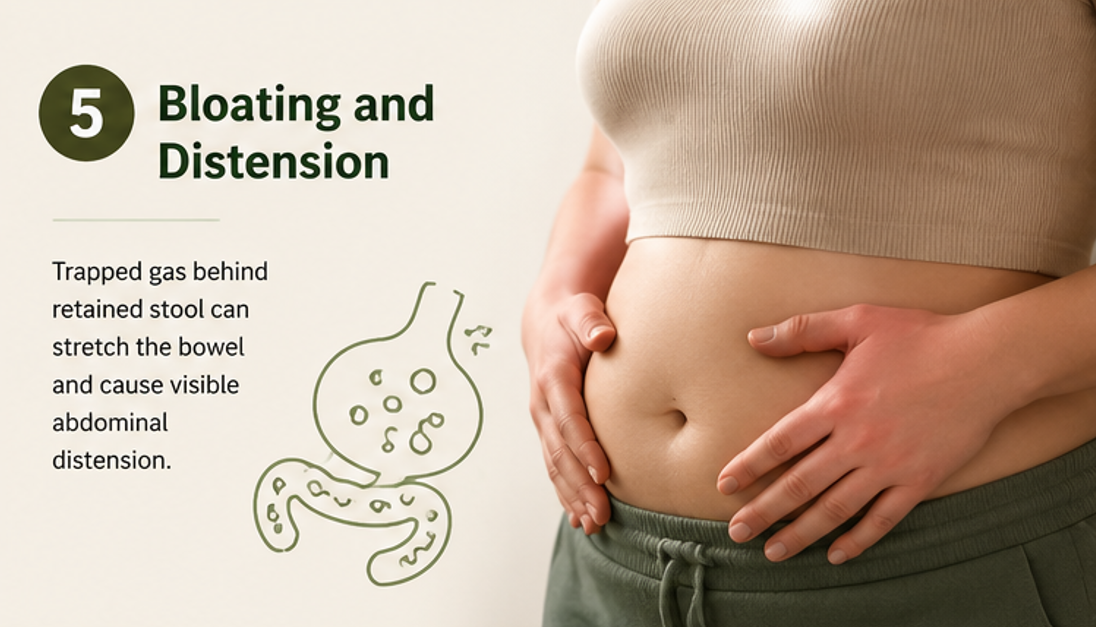
If there's one symptom I see improve more than almost any other after treating constipation, it's bloating. When stool sits in the bowel, bacteria have longer to ferment carbohydrates and produce gas.
That gas becomes trapped behind retained stool, stretching the bowel and causing visible abdominal distension. This is especially common in people with IBS and SIBO. In fact, constipation is one of the most overlooked causes of persistent bloating.
Before assuming every episode of bloating is due to food intolerances or FODMAPs, it's worth asking whether your bowels are actually emptying completely and address this first.
Smelly gas can also be a clue. When waste remains in the colon longer than it should, bacteria have more time to ferment proteins and carbohydrates, often producing stronger-smelling gases. While occasional odour is completely normal, persistently smelly gas (like gas that could clear a room) alongside constipation can be another sign that food and waste are sitting in the gut for too long.
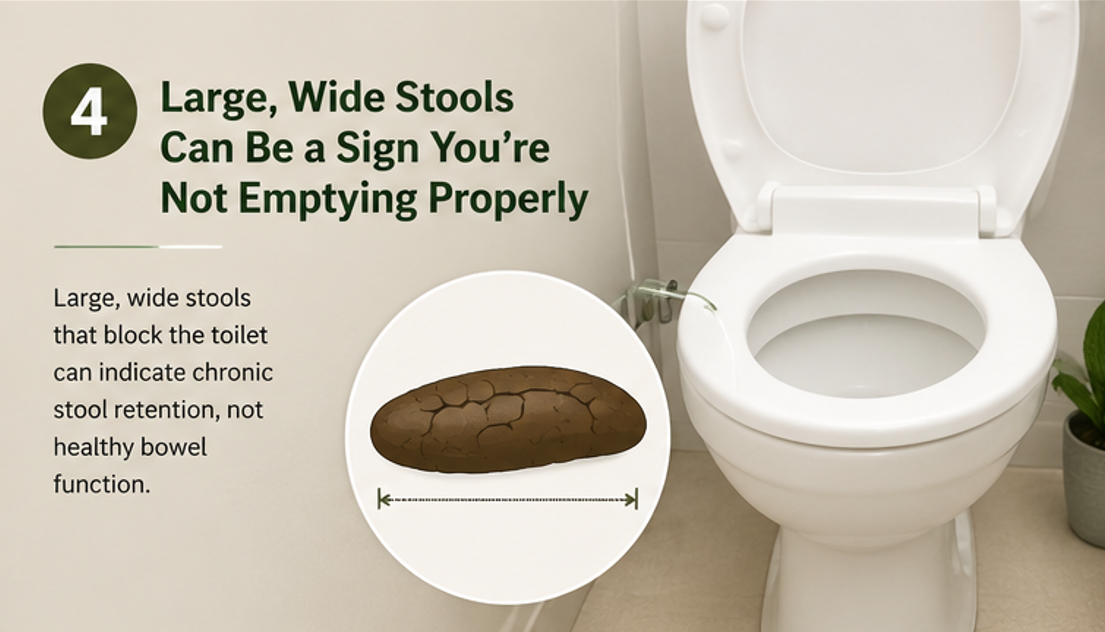
Many people assume that producing large bowel motions means they're clearing everything out. Ironically, the opposite can sometimes be true.
When stool sits in the colon for extended periods, more water is removed from it, allowing larger masses to accumulate before they're finally passed. This chronic stool retention can also stretch the bowel over time, meaning it can hold increasingly larger bowel motions before the urge to go is triggered.
Some people proudly tell me,
"I do one enormous poo every morning." Or “My child does full on adult sized poo”
Yet they still feel bloated, uncomfortable and incomplete afterwards.
Large, wide stools—particularly if they regularly block the toilet or are difficult to pass—can sometimes indicate chronic faecal loading rather than healthy bowel function.
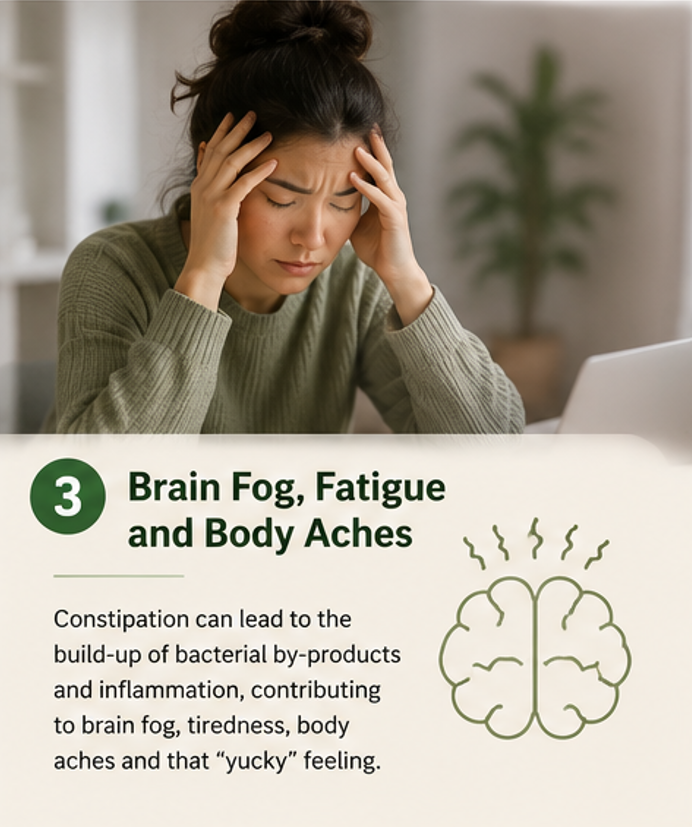
Your colon isn't simply a waste pipe.
One of its jobs is to absorb water—and unfortunately, when waste sits there for prolonged periods, various bacterial by-products and inflammatory compounds remain in contact with the gut lining for longer than they should.
Constipation is also associated with changes in the gut microbiome, encouraging greater fermentation and the production of compounds that may contribute to inflammation and altered gut-brain signalling.
Many people notice they feel:
foggy-headed
tired
sluggish
achy
generally "toxic" or “yuck”
Although the word "toxins" is often overused online, there is good evidence that chronic constipation alters the gut environment and increases exposure to bacterial metabolites (chemicals) that may influence inflammation and wellbeing.
Many patients describe feeling noticeably “clearer, lighter and more energetic” once their bowels begin moving properly again.
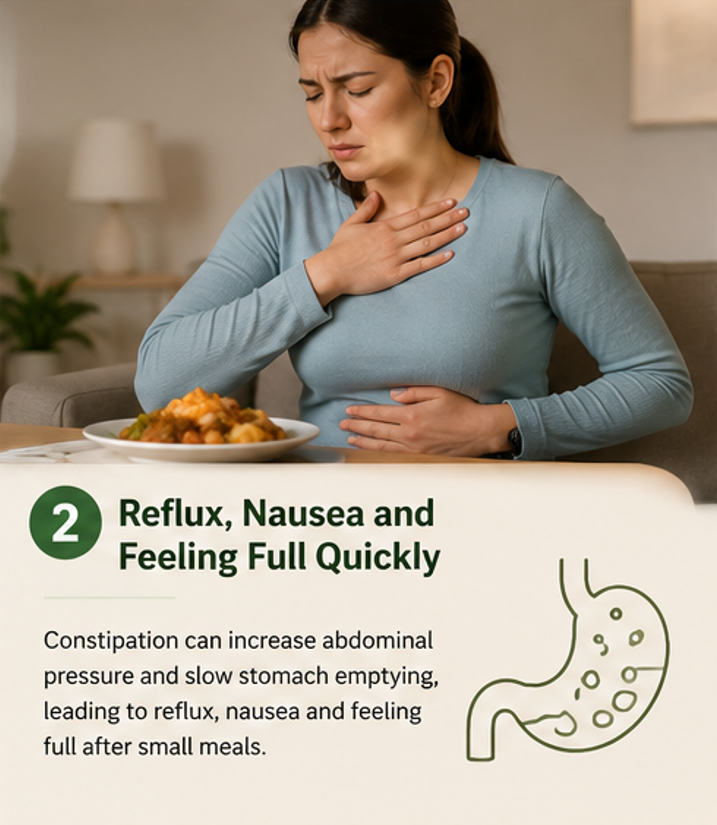
Your digestive system works like a conveyor belt.
If things aren't moving well at the bottom, the entire system can slow down and get “backed-up”.
Constipation can increase pressure within the abdomen, making reflux more likely. It may also slow stomach emptying, leaving food sitting in the stomach longer than it should. This is going to be more common in kids, as they have a smaller digestive system.
This can lead to:
reflux
heartburn
nausea
burping
reduced appetite
feeling full after only a few mouthfuls.
Many people spend years treating the stomach while overlooking what is happening further down the digestive tract.
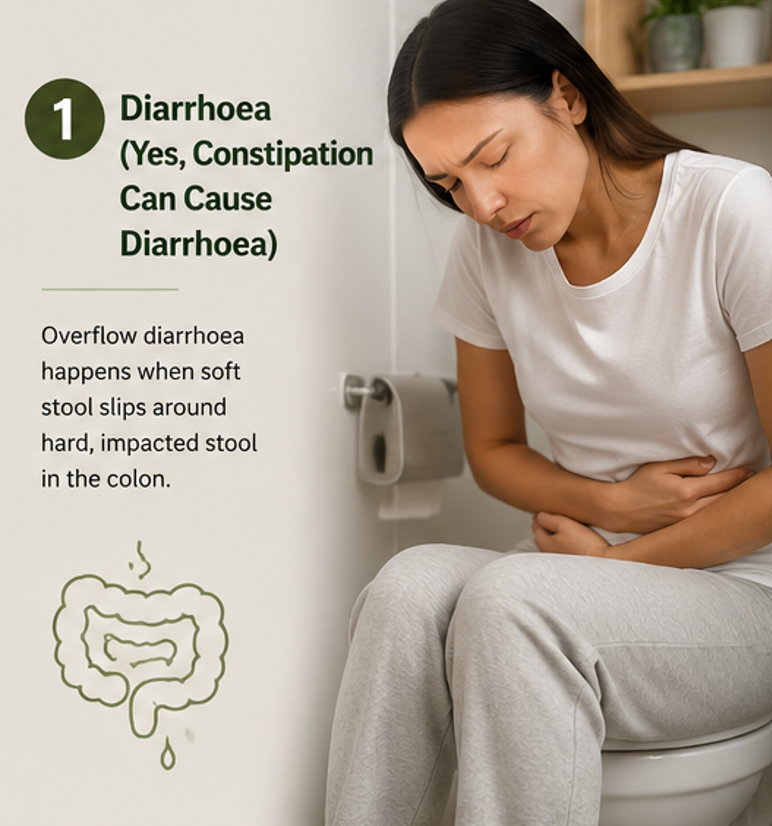
This one surprises almost everyone!!!
If hard stool becomes lodged in the rectum or lower colon, softer stool and fluid can leak around the blockage.
This is called overflow diarrhoea, and it's particularly common in children, older adults and people with chronic constipation. Many people are mistakenly treated for diarrhoea when the real problem is constipation.
Children may also experience bowel accidents or faecal incontinence because the rectum becomes overstretched and loses normal sensation. By the time they feel the urge, it's often too late.
Constipation Is Often a Symptom, Not the Root Cause
One of the biggest mistakes I see is people focusing solely on making themselves "go."
Laxatives certainly have their place, but unless we understand why constipation developed, it's likely to keep returning.
Some of the underlying causes I commonly investigate include:
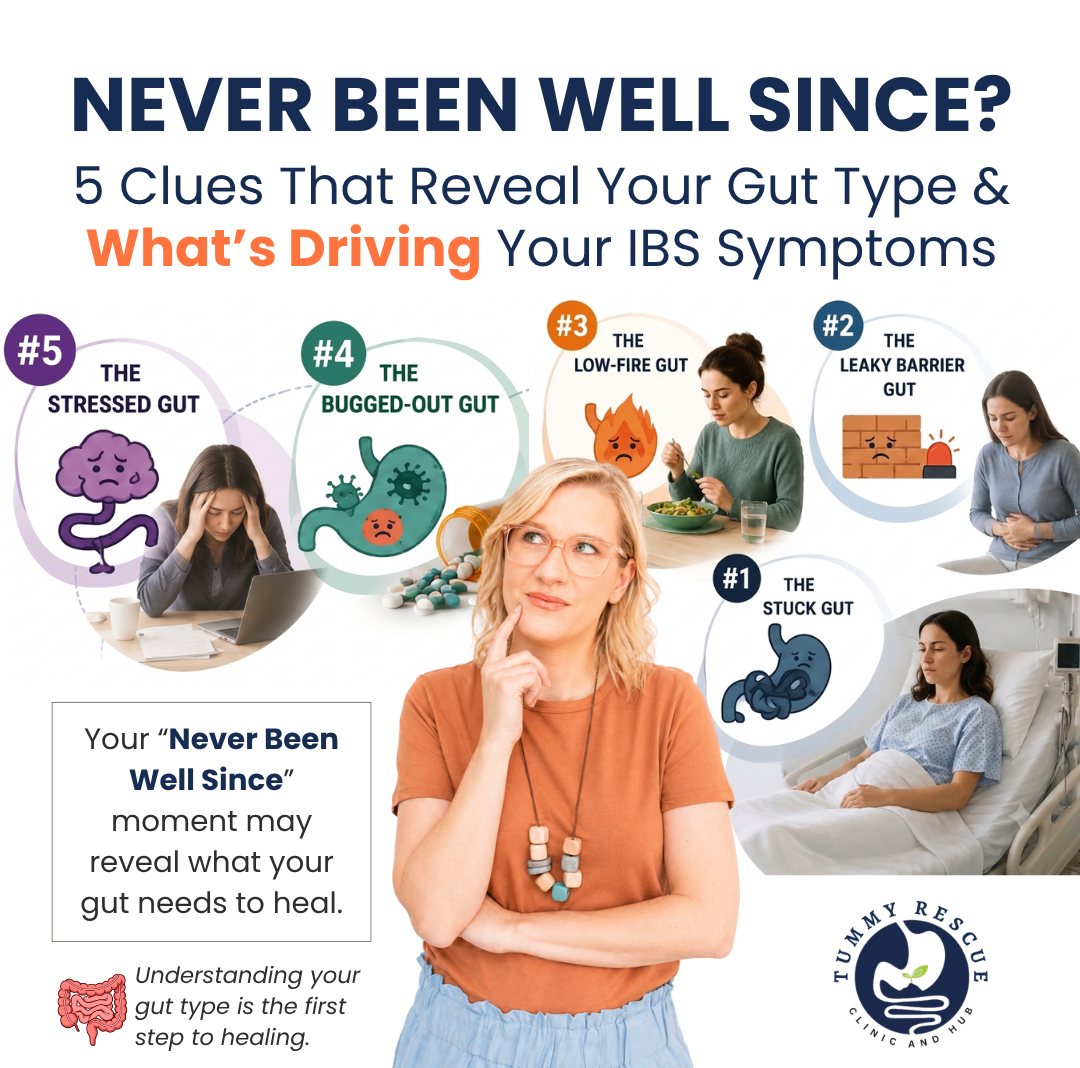
Poor stomach acid or digestive enzyme production (the Low-Fire Gut type)
Altered gut motility (the Stuck Gut Type)
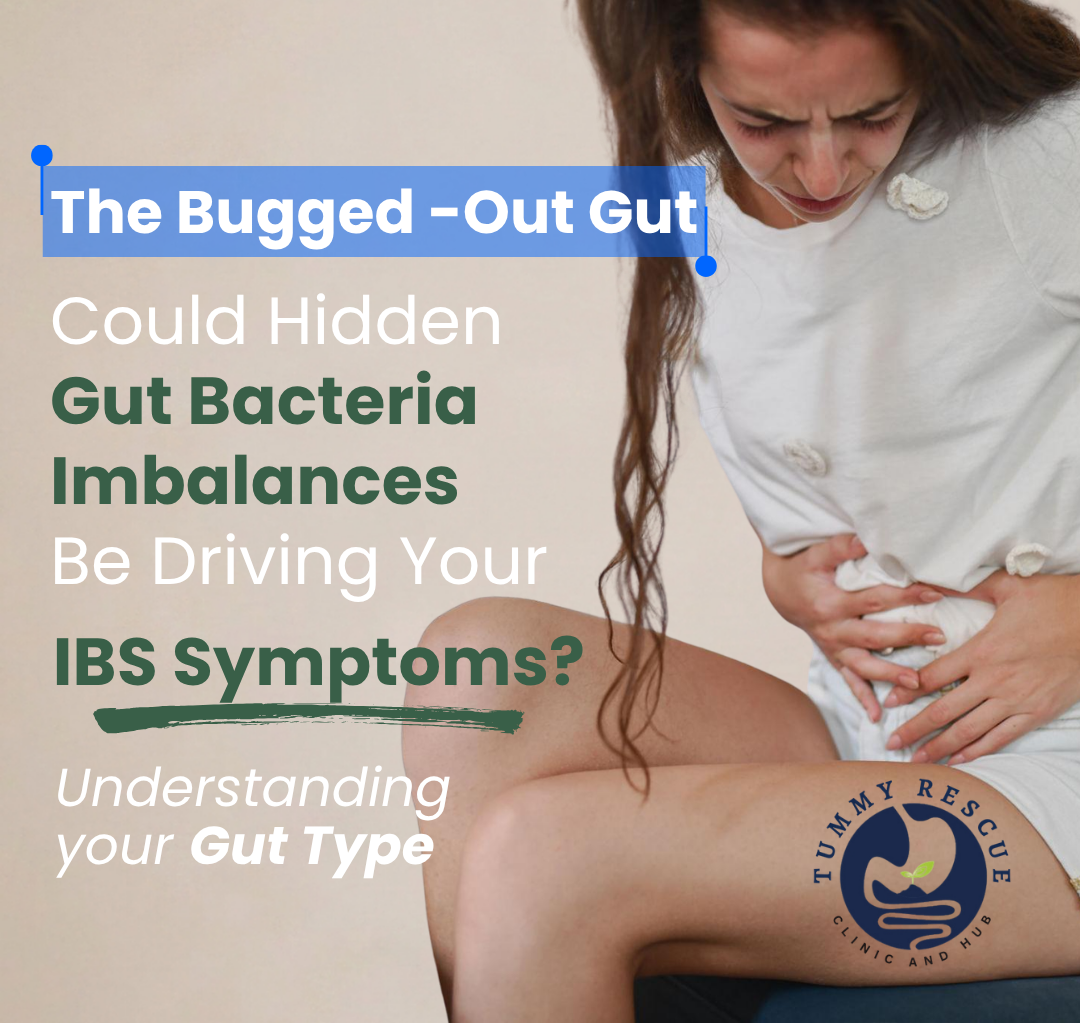
SIBO and methane overgrowth (the Bugged Out Gut Type)
Pelvic floor dysfunction
Structural issues such as rectoceles or rectal intussusception
Low fibre intake (or sometimes the wrong type of fibre)
Inadequate hydration
Medication side effects
Stress and nervous system dysregulation (the Stressed Gut Type)
Finding the underlying driver is what leads to long-term improvement.
As a naturopath with more than 20 years of clinical experience, a Microba Institute Microbiome Mastery graduate, I focus on identifying these root causes rather than simply masking symptoms.
When Should You Seek Help?
If you regularly experience constipation, bloating, overflow diarrhoea, brain fog or reflux, don't assume they're unrelated problems.
Often they're different pieces of the same puzzle.
With the right assessment, it's possible to identify why your bowels aren't functioning properly and create a personalised plan that restores healthy digestion naturally.
Ready to Get to the Bottom of Your Gut Symptoms?
If you've been living with constipation, IBS or bloating and still don't know why, you're not alone.
I help people identify & address their gut type (check out my 5 Gut Type series in the blogs) and the causes, to resolve symptoms and get lasting results.
More articles you might love:

Download my FREE E-book: 5 ways to reduce your bloating, pain & gas ☝️☝️☝️

The heartbeat
behind the work! 💚✨
🌿
I am Danielle Elliott a qualified Naturopath and the owner of Tummy Rescue.
I have been helping kids & adults improve their health for over 20 years, with the last 16 years concentrating on helping patients with any kind of gut disorder. I began focussing on everything gut related after my husband was diagnosed with Crohn’s Disease. And lucky I did……as my husband and both our kids have Coeliac Disease and my daughter has a dairy protein allergy.
So…. I am well and truly where I am meant to be!
I love being able to help people to soothe and calm their symptoms, investigate the causes and support and improve their gut function.
I also get to write educational pieces to train practitioners and am often interviewed for podcasts and summits, which is another really rewarding part of my work. I love educating people (this is something I do in every consult), because I do believe knowledge is power. It gives you the tools to make the changes you need to!
So, when you opt-in to my E-book, you are beginning on a journey of learning and discovery, of how you can reduce your symptoms of bloating, gas & pain and improve your gut health.
I would be honoured to help you along the way.
Danielle ✖️🧡✖️🧡